

Cabasila on the Eucharist
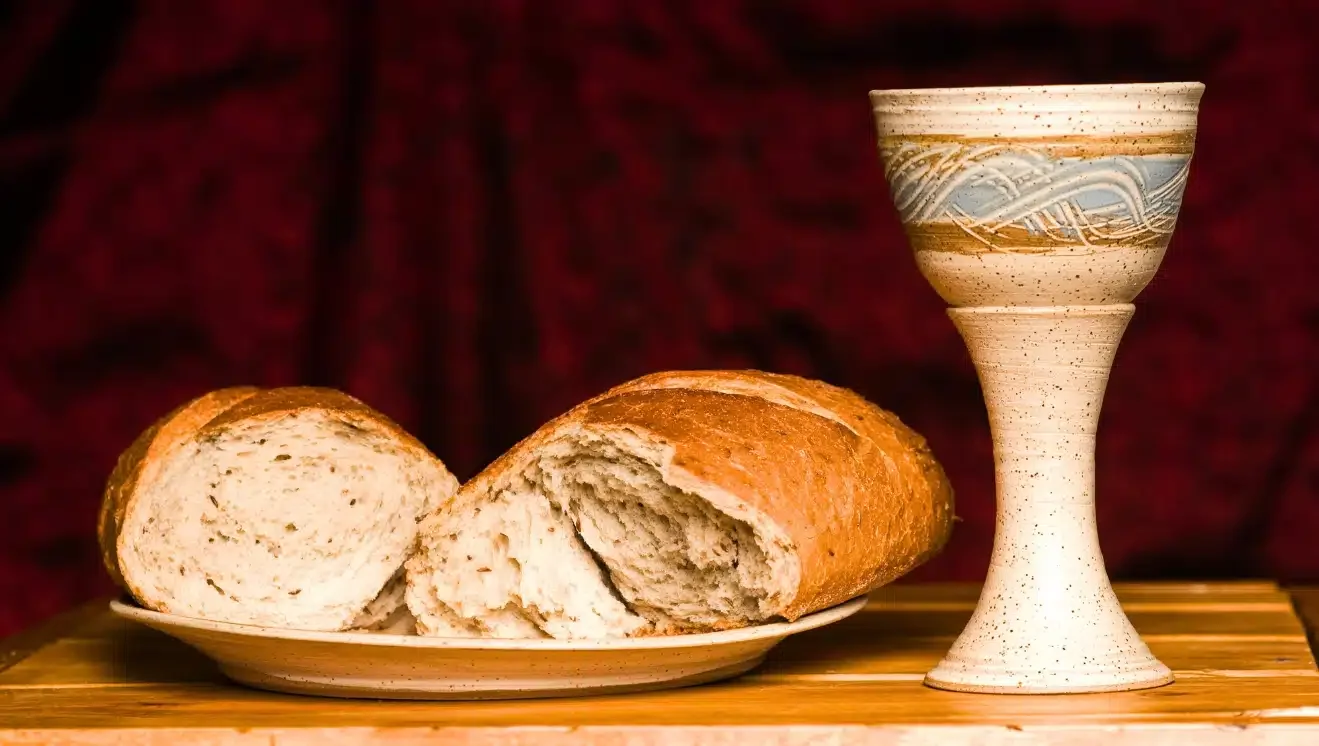
For Nicholas Cabasilas, the Eucharist is a representational symbol. It is a means of recalling the atoning work of Christ. Here we have already departed from the Syriac notion of raza, which means ‘symbol,’ ‘mystery,’ ‘secret’—all together at once (Brock, 1985: 41). As in Greek, its plural form, raze, refers to the Eucharist, the ‘Mysteries”—the divine Reality thot exceeds human understanding and transcends human reality. But It is something that we can touch, see, consume, and become one with it, because it is something physical, because it is a Symbol. For the ancient Syro-Palestinians, a symbol has the intrinsic reality in itself, though hidden and invisible. A symbol carries reality in itself.
The rich or ‘heavy’ notion of the meaning of ‘symbol’ in Syriac (raza) mutates, however, into a representational (and modern) notion of symbol, in which the physical stands for the metaphysical, the visible for the invisible. A symbol () is where the incongruous realities or things are put together. In modern times, a symbol becomes a token of the reality that it refers to. In this sense, a symbol merely refers to another reality that the physical is not (in itself) but refers to. Like a sign-post, a symbol points to the reality that is not present in itself but outside itself. A symbol refers to that which it is not, a sign that refers and defers to something else: a signification that signifies the signified. In the sense, the Eucharist signifies the historical event of Christ’s crucifixion. It recalls the past into the present. This is the function of the Eucharist in particular and the Sacraments in general. Such is the understanding of Cabasilas that has already been developed by Anselm and by Matu