

Symbol
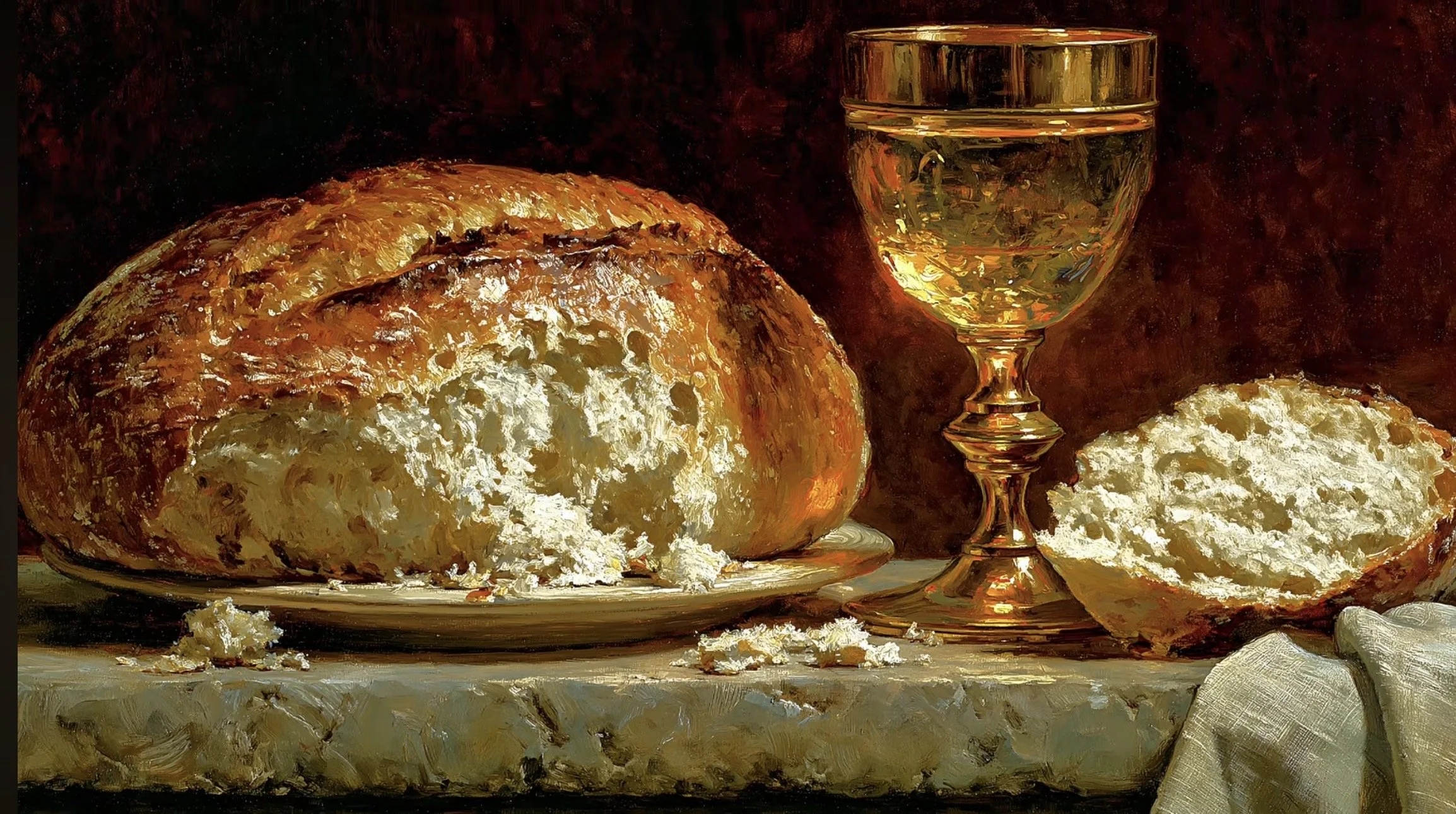
We have lost the Byzantine sense of symbol. Symbol in Syriac is raza, which means ‘secret,’ ‘mystery,’ ‘symbol’—all together at once (Brock, 1985: 41). The Byzantinians had the Syriac notion of symbol.
A symbol by definition is mystery; it is impenetrable and inscrutable. It does not satisfy the question: What is it? What does it mean? How does it happen? Symbol is aporia (ἀπορία, ‘difficulty of passing’), where reason runs into a deadend. It is opaque and keeps its hidden reality within itself. It does not refer to something else and transport you to somewhere other than itself. Symbol is not a metaphor; it does not stand for something else or carry you over and transport you to somewhere else (μεταφέρω, ‘carry over,’ ‘transfer’). Symbol remains enigmatic and opaque. It is in itself. It hold hidden reality intact within itself, as secret, as hidden, as mystery. It resists allegorization or metaphoric transference. Its meaning cannot be raised up into a higher level (aufhebung).
St Germanus on Icons
Symbol is not icon. A symbol does not represent or point to something else other than itself, like an icon or a sign. It does not stand in for something else, like allegory.
St Germanus spoke of an icon as follows, as he explains at the iconoclastic council of 754, which condemned him anyway:
… we draw the image of [Christ’s] human aspect according to the flesh, and not according to His incomprehensible and invisible divinity, for we feel the need to represent what is our faith… […] Because of this unshakable faith in Him, we represent the character of His holy body on the icons, and we venerate and honor them with the reverence due to them.
On the Divine Liturgy, trans. P. Meyendorff, 1984: 49.
An icon stands in for (or represents) Christ, Mary, or the saints. But the Bread, the Symbol of Christ in contrast does not represent Christ. It is Christ. Once consecrated, it is the Reality of Christ Himself in itself—no matter how hidden, paradoxical, impenetrable, and Infinite the Reality is that it contains. Remaining secretive, opaque, and mysterious (thus, symbolic), it is the Sacrament, the divine Reality itself. It is in itself, by itself, and for itself.
Symbol as Enigma and Paradox
The sensible Symbol contains the Uncontainable and the Invisible, like Mary’s womb bearing Christ Himself, the Logos. Thus, Symbol is paradox, like the Incarnation. For it is the infinite in the finite, God in man, The Son of God in Jesus of Nazareth. Christ is “the image of the invisible God” (Col 1.15)—the invisible in the visible, the intelligible in the sensible, the colorless in the colored, the measureless in the measured, the uncontainable by any measure or intellect, the Word unarticulatable in words, as in Christ in the Bread and Wine.
Moreover, in a symbol (συμβάλλω, ‘jumble up together’) the two diametric opposite, irreconcilable, and incongruent realities are ‘dash[ed] together’ to form a unified, sensible being, such as God-man or Christ’s Body in a morsel of bread and wine, God’s act/work (ἔργον) in human affairs and history. The divine reality is hidden forever in the sensible, never to be disclosed, never to be fully revealed, except as a symbol. And yet it is at work, in operation, in which we can participate in and through the Symbol. Symbols allow us to participate or partake in the Divine Reality. They join us to Christ, as in baptism.
Mateos puts it best when he compares symbol to allegory:
A symbol is something that naturally leads us to some superior reality and in some way contains it. An allegory is a meaning somewhat arbitrarily imposed upon an act or object, and thus the object leads us to some other reality only because we ourselves attach to it a meaning that does not arise from the thing itself.
Mateos, 2016: 55.
Augustine on Signs
Contrasting a symbol to a sign clarifies the meaning of symbol. Augustine (d. 430) defined a sign as follows:
a thing which, over and above the impression it makes on the senses, causes something else to come into the mind as a consequence of itself.
On Christian Doctrine, Bk 2, Ch 1, Kindle Classic.
Examples Augustine gives for signs are: animal footprints, smoke for fire, voice for one’s “feeling in his mind,” the trumpet sounds for soldiers. Symbols in contrast contain in itself what cannot be contained in its sensible manifestation. Symbol is the Thing in Itself.
Divine Symbols as Sacraments
The following are the divine Symbols (Sacraments) that the church recognizes: the Eucharist, baptism, and the rite of unction (oil). The Catholics have 7 sacraments. The Orthodox do not have a defined number of Sacraments.
The Bread and Wine are the divine Mysteries (raze), a paradox and a Symbol. In the eucharistic rite, Christ Himself is offering and is being offered on the altar as a sacrifice. This divine Reality actually happens in the Liturgy. Thus, we can literally partake or participate in this divine act/work, having been transformed ourselves and being purified by the Holy Spirit. We participate in and have a share in the transformation of the Bread and Wine into Christ and His Work. We become divine in the image of God, in the way we are meant to be: to be better than ourselves in our fallen nature.
The World of Signs
In our modern culture we have moved away from the strong, ontological sense of ‘symbol.’ And we understand symbols only in the weak sense: as sign. In the world of signs, what is real is (only) appearance (Nietzsche). What counts is not what is but how it impacts or affects the beholder, psychologically, emotionally, behaviorally, commercially, etc.
The power of signs, however, has great value in commercial world or in the world of propaganda, where nothing has intrinsic truth value in itself, is worth in itself (like good, truth, justice, honer, mercy, forgiveness, etc.) but only relative values such as ‘investment value,’ ‘cash value,’ or ‘what’s in it for me?’ Thus, having lost the symbolic meaning, the Liturgy too boils down to: ‘What’s in it for me?’ In this view, the Liturgy is only a means to God and His Work, not God Himself at Work. If the Liturgy as a whole is a Sacrament, God the Father is there serving us, the Son is there sacrificing Himself, and the Holy Spirit is there transforming us into His image.
The degradation in our understanding of ‘symbol’ (and by implication our understanding of the Liturgy) is due in large part to the Greek word itself, however.
Σύμβολον primarily means ‘sign.’ A symbol, in contrast, that which contains the inscrutable reality in itself, more than and beyond its finite and sensible capacity, does not refer to or represent anything else other than itself. It is the Mystery Itself, the Thing Itself in Itself, enigmatic, inscrutable, and opaque. A symbol presents itself in itself, by itself, and for itself. It imposes itself on its own: “This is my Body….” We must respond—either to receive or to reject.
Philoxenus of Mabbug
The loss of the strong sense of the word ‘symbol’ is evident in the liturgical commentaries dating back, however, as early as the Liturgy itself. For example, Philoxenus of Mabbug (ca. 500, a contemporary to Pseudo-Dionysius), who served as Metropolitan at Mabbug between 485 and 519, explains the meaning of partaking of the Eucharist as follows—some of his words have survived to this day in our current hymns. He explains in the mode of prayer how we are to approach the Bread and the Cup:
As you have made me worthy to approach you and receive you—and see, my hands embrace you confidently—make me worthy, Lord, to eat you in a holy manner and to take the food of your body as a taste of your life. Instead of the stomach, the body’s member, may the womb of my intellect and the hand of my mind receive you. May you be conceived in me as [you were] in the womb of the Virgin. There you appeared as an infant, and your hidden self was revealed in the world as corporeal fruit; may you also appear in me here and be revealed from me in fruits that are spiritual works and just labors pleasing to your will.
As quoted in Taft, 2018: 97; Mabbug was the “capital of the Roman Province of Euphratensis in the Diocese of Orient, located west of the Euphrates half way between Edessa and Antioch on the road from Mesopotamia to the Mediterranean” (96).
The Bread in my hand, as Philoxenus interpretats, represents my receiving of Christ’s body. My eating of It represents my tasting of the eternal Life. My digesting of It represents my noetic (intellectual) assimilation of Him, resulting in my good works. But can the Eucharist explained this way? Do we not have theōsis itself as we approach with fear, faith, and love? “We have seen the true Light…” we sing at the first moment of receiving Christ Himself. The Encounter itself is what counts, not the explanation thereof. The Encounter itself cannot be explained; it is beyond words and reason. It is the Symbolic Reality in Itself.
Theodore of Mopsuestia
In Theodore of Mopsuestia (d. 428) Mateos finds another example of the erosion of the symbolic sense that gives rise to allegorical meanings of the Liturgy. Theodore was the first to explain the deposition of the Gifts on the altar at the conclusion of the Great Entrance as signifying the deposition of our Lord in the sepulcher (Mateos, 2016: 55). Mateos credits Theodore as the originator for later addition (in the 14th century; Taft, 2004: 246) to the Prayer of Cherubic Hymn.
The prayer begins: “The noble Joseph took down from the wood (of the Cross) your most pure Body, wrapped it in a clean, and with fragrant spices laid it in burial in a new tomb” (Mateos, 2016: 55).
Mateos objects: “Why is this troparion chanted at this time?” His disciple, Robert F. Taft, suggests that it should belong to the Holy Week, from where the prayer originates—more precisely, from the Good-Friday vespers in Jerusalem dating back to 381 (Taft, 2004: 245). The reference to “the noble Joseph…” belongs to the Good Friday, not to every Divine Liturgy celebrated year around.
Allegorizing the Liturgy, such as in Theodore of Mopsuestia, creates confusion and hampers our understanding of it, because it leads to loss of the unity of the Liturgy considered and experienced as a whole. As Mateos puts it:
One loses … the central unit of the single mystery and ends with his attention dispersed and scattered about disjointed parts of the liturgy.
Mateos, 2016: 56.
Liturgy as Symbol
The Divine Liturgy should be understood as a whole, in its entirety. Some additions to the Liturgy to meet a certain need at the moment in the past fall into disuse, if and when the need no longer exists. Instead of eliminating them, they are shifted and placed in inappropriate places in the Liturgy, thus losing utility and functionality, while cluttering the rite unnecessarily.
For example, consider the insertions of Psalms or Prokeimenon, the three antiphons, and the multiple litanies. As Mateos writes:
Elements of the liturgy has undergone a particular evolution and development. Pieces added to the liturgy in order to meet specific needs or purposes have been kept in the celebration long after these needs or purposes ceased to exist. On the other hand, certain older ways of doing things, rites and ceremonies, long ago fallen into disuse, might today be preferable to the later developments that replaced them.
Mateos, 2016: 39.
For example, with regards to the three antiphons sung nowadays prior to the Epistle reading, Mateos writes:
Between the seventh and eighth centuries a new development took place in the liturgy: the preparation of bread and wine, which until that time had been done after the sessions and litanies (that is, at the beginning of the eucharistic part of the liturgy), were transferred to the very beginning, before the first entrance [to the rite of Proskomidi]. While this rite of preparation was going on, it was necessary to fill the time with some religious prayer or song, and three antiphons, similar to those chanted in the Forum [outside the narthex] on certain days, were added to the beginning of the liturgy. The already existing entrance hymn became the third antiphon, thus losing its function as an Introit, and the two new antiphons were placed before it.
Mateos, 2016: 43.
I am not qualified to propose specific changes in the Liturgy. I only note that some changes are necessary. The ecumenical task of reforming the Liturgy is monumental, requiring high degree of care, scholarship, and ecclesiastical consensus and foresight.
In any event, the illustrative or allegorical use of the Liturgy at large and that of the Symbols/Sacraments in particular might work well to cultivate the believers’ piety. If so, they should probably belong to hymnography.
Eucharist as a Tool of Comprehension
Is the Eucharist a means to an end, a tool of our edification, comprehension, and contemplation? As a symbol, however, is it not the Reality Itself, in which we participate, partake, have a share, and have a communion (μετουσία, CH 305C, 308A)? Our piety and good work may result from our comprehension and contemplation of the Eucharist (e.g., ‘Christ gave himself for me’). But, more fundamentally, do they not arise from our transformation into the divine image of Christ?
After all, knowledge does not lead to action. Understanding the Eucharist does not necessarily lead to our practice of Eucharistic, sacrificial living. Moreover, a symbol is supposed to be enigmatic. It remains opaque, hidden, secretive in itself. It is the Mystery Itself. It transforms us as such, if and when we receive and participate in the Reality itself.
Knowing as a Mode of Being
The Ancient Greeks believed that knowledge transforms one’s life. We the moderns no longer believe that—as we separate knowledge from practice—what we know to be true moves us to live the truth. “Truth shall make you free,” makes no sense to the moderns. We do not do what we ought to do, to cite another example. Likewise, our understand of the Eucharist does not necessarily moves us to live our life as “a living sacrifice” (Rom 12.1). Instead, we must be transformed and become “a new creation” (2 Cor 5.17) by the knowledge of Christ.
Like fire, illumination begets illumination. Ignition entails transformation. If the Eucharist is the Symbol in itself, and if Christ is “the Light of the Father” (as Dionysius says, CH 121A), then, our participation in the Eucharist should transform ourselves into a light, illuminating ourselves illuminating others in turn. While our understanding has limits; the Mystery itself in its majestic enigma has no limits. It strikes down our pride and makes us crumble and to fall down in worship. For the divine Mysteries (raze) confront us, as the Son of God comes “in the plate and in the cup.”
Pseudo-Dionysius on Symbol
It is with the strong sense of ‘symbol’ in mind, furthermore, that Pseudo-Dionysius (b./d. ~500) suddenly shifts into the mode of prayer when elucidating the eucharistic rite:
O most divine and holy Initiation [τελετή, ‘rite’], uncover completely the enigmatic veil of your Symbols [συμβολικῶς].
EH, 428C; translation mine.
Here, first of all, Dionysius equates the liturgy with symbols/sacraments. Second, he expresses his longing to reach the Thing in Itself, uncovering the veil of enigma and opacity. He longs for Christ himself, the divine Reality, who is in the Rite of Communion. The Symbol is the way to Christ; It is Him.
Back to top.